mirror of
https://gitee.com/wanwujie/deer-flow
synced 2026-04-03 06:12:14 +08:00

563 lines
24 KiB
Markdown
563 lines
24 KiB
Markdown
# 🦌 DeerFlow - 2.0
|
|
|
|
English | [中文](./README_zh.md) | [日本語](./README_ja.md) | [Français](./README_fr.md) | [Русский](./README_ru.md)
|
|
|
|
[](./backend/pyproject.toml)
|
|
[](./Makefile)
|
|
[](./LICENSE)
|
|
|
|
<a href="https://trendshift.io/repositories/14699" target="_blank"><img src="https://trendshift.io/api/badge/repositories/14699" alt="bytedance%2Fdeer-flow | Trendshift" style="width: 250px; height: 55px;" width="250" height="55"/></a>
|
|
> On February 28th, 2026, DeerFlow claimed the 🏆 #1 spot on GitHub Trending following the launch of version 2. Thanks a million to our incredible community — you made this happen! 💪🔥
|
|
|
|
DeerFlow (**D**eep **E**xploration and **E**fficient **R**esearch **Flow**) is an open-source **super agent harness** that orchestrates **sub-agents**, **memory**, and **sandboxes** to do almost anything — powered by **extensible skills**.
|
|
|
|
https://github.com/user-attachments/assets/a8bcadc4-e040-4cf2-8fda-dd768b999c18
|
|
|
|
> [!NOTE]
|
|
> **DeerFlow 2.0 is a ground-up rewrite.** It shares no code with v1. If you're looking for the original Deep Research framework, it's maintained on the [`1.x` branch](https://github.com/bytedance/deer-flow/tree/main-1.x) — contributions there are still welcome. Active development has moved to 2.0.
|
|
|
|
## Official Website
|
|
|
|
[<img width="2880" height="1600" alt="image" src="https://github.com/user-attachments/assets/a598c49f-3b2f-41ea-a052-05e21349188a" />](https://deerflow.tech)
|
|
|
|
Learn more and see **real demos** on our [**official website**](https://deerflow.tech).
|
|
|
|
## Coding Plan from ByteDance Volcengine
|
|
|
|
<img width="4808" height="2400" alt="英文方舟" src="https://github.com/user-attachments/assets/2ecc7b9d-50be-4185-b1f7-5542d222fb2d" />
|
|
|
|
- We strongly recommend using Doubao-Seed-2.0-Code, DeepSeek v3.2 and Kimi 2.5 to run DeerFlow
|
|
- [Learn more](https://www.byteplus.com/en/activity/codingplan?utm_campaign=deer_flow&utm_content=deer_flow&utm_medium=devrel&utm_source=OWO&utm_term=deer_flow)
|
|
- [中国大陆地区的开发者请点击这里](https://www.volcengine.com/activity/codingplan?utm_campaign=deer_flow&utm_content=deer_flow&utm_medium=devrel&utm_source=OWO&utm_term=deer_flow)
|
|
|
|
## InfoQuest
|
|
|
|
DeerFlow has newly integrated the intelligent search and crawling toolset independently developed by BytePlus--[InfoQuest (supports free online experience)](https://docs.byteplus.com/en/docs/InfoQuest/What_is_Info_Quest)
|
|
|
|
<a href="https://docs.byteplus.com/en/docs/InfoQuest/What_is_Info_Quest" target="_blank">
|
|
<img
|
|
src="https://sf16-sg.tiktokcdn.com/obj/eden-sg/hubseh7bsbps/20251208-160108.png" alt="InfoQuest_banner"
|
|
/>
|
|
</a>
|
|
|
|
---
|
|
|
|
## Table of Contents
|
|
|
|
- [🦌 DeerFlow - 2.0](#-deerflow---20)
|
|
- [Official Website](#official-website)
|
|
- [InfoQuest](#infoquest)
|
|
- [Table of Contents](#table-of-contents)
|
|
- [Quick Start](#quick-start)
|
|
- [Configuration](#configuration)
|
|
- [Running the Application](#running-the-application)
|
|
- [Option 1: Docker (Recommended)](#option-1-docker-recommended)
|
|
- [Option 2: Local Development](#option-2-local-development)
|
|
- [Advanced](#advanced)
|
|
- [Sandbox Mode](#sandbox-mode)
|
|
- [MCP Server](#mcp-server)
|
|
- [IM Channels](#im-channels)
|
|
- [From Deep Research to Super Agent Harness](#from-deep-research-to-super-agent-harness)
|
|
- [Core Features](#core-features)
|
|
- [Skills \& Tools](#skills--tools)
|
|
- [Claude Code Integration](#claude-code-integration)
|
|
- [Sub-Agents](#sub-agents)
|
|
- [Sandbox \& File System](#sandbox--file-system)
|
|
- [Context Engineering](#context-engineering)
|
|
- [Long-Term Memory](#long-term-memory)
|
|
- [Recommended Models](#recommended-models)
|
|
- [Embedded Python Client](#embedded-python-client)
|
|
- [Documentation](#documentation)
|
|
- [Contributing](#contributing)
|
|
- [License](#license)
|
|
- [Acknowledgments](#acknowledgments)
|
|
- [Key Contributors](#key-contributors)
|
|
- [Star History](#star-history)
|
|
|
|
## Quick Start
|
|
|
|
### Configuration
|
|
|
|
1. **Clone the DeerFlow repository**
|
|
|
|
```bash
|
|
git clone https://github.com/bytedance/deer-flow.git
|
|
cd deer-flow
|
|
```
|
|
|
|
2. **Generate local configuration files**
|
|
|
|
From the project root directory (`deer-flow/`), run:
|
|
|
|
```bash
|
|
make config
|
|
```
|
|
|
|
This command creates local configuration files based on the provided example templates.
|
|
|
|
3. **Configure your preferred model(s)**
|
|
|
|
Edit `config.yaml` and define at least one model:
|
|
|
|
```yaml
|
|
models:
|
|
- name: gpt-4 # Internal identifier
|
|
display_name: GPT-4 # Human-readable name
|
|
use: langchain_openai:ChatOpenAI # LangChain class path
|
|
model: gpt-4 # Model identifier for API
|
|
api_key: $OPENAI_API_KEY # API key (recommended: use env var)
|
|
max_tokens: 4096 # Maximum tokens per request
|
|
temperature: 0.7 # Sampling temperature
|
|
|
|
- name: openrouter-gemini-2.5-flash
|
|
display_name: Gemini 2.5 Flash (OpenRouter)
|
|
use: langchain_openai:ChatOpenAI
|
|
model: google/gemini-2.5-flash-preview
|
|
api_key: $OPENAI_API_KEY # OpenRouter still uses the OpenAI-compatible field name here
|
|
base_url: https://openrouter.ai/api/v1
|
|
|
|
- name: gpt-5-responses
|
|
display_name: GPT-5 (Responses API)
|
|
use: langchain_openai:ChatOpenAI
|
|
model: gpt-5
|
|
api_key: $OPENAI_API_KEY
|
|
use_responses_api: true
|
|
output_version: responses/v1
|
|
```
|
|
|
|
OpenRouter and similar OpenAI-compatible gateways should be configured with `langchain_openai:ChatOpenAI` plus `base_url`. If you prefer a provider-specific environment variable name, point `api_key` at that variable explicitly (for example `api_key: $OPENROUTER_API_KEY`).
|
|
|
|
To route OpenAI models through `/v1/responses`, keep using `langchain_openai:ChatOpenAI` and set `use_responses_api: true` with `output_version: responses/v1`.
|
|
|
|
CLI-backed provider examples:
|
|
|
|
```yaml
|
|
models:
|
|
- name: gpt-5.4
|
|
display_name: GPT-5.4 (Codex CLI)
|
|
use: deerflow.models.openai_codex_provider:CodexChatModel
|
|
model: gpt-5.4
|
|
supports_thinking: true
|
|
supports_reasoning_effort: true
|
|
|
|
- name: claude-sonnet-4.6
|
|
display_name: Claude Sonnet 4.6 (Claude Code OAuth)
|
|
use: deerflow.models.claude_provider:ClaudeChatModel
|
|
model: claude-sonnet-4-6
|
|
max_tokens: 4096
|
|
supports_thinking: true
|
|
```
|
|
|
|
- Codex CLI reads `~/.codex/auth.json`
|
|
- The Codex Responses endpoint currently rejects `max_tokens` and `max_output_tokens`, so `CodexChatModel` does not expose a request-level token cap
|
|
- Claude Code accepts `CLAUDE_CODE_OAUTH_TOKEN`, `ANTHROPIC_AUTH_TOKEN`, `CLAUDE_CODE_OAUTH_TOKEN_FILE_DESCRIPTOR`, `CLAUDE_CODE_CREDENTIALS_PATH`, or plaintext `~/.claude/.credentials.json`
|
|
- On macOS, DeerFlow does not probe Keychain automatically. Export Claude Code auth explicitly if needed:
|
|
|
|
```bash
|
|
eval "$(python3 scripts/export_claude_code_oauth.py --print-export)"
|
|
```
|
|
|
|
4. **Set API keys for your configured model(s)**
|
|
|
|
Choose one of the following methods:
|
|
|
|
- Option A: Edit the `.env` file in the project root (Recommended)
|
|
|
|
|
|
```bash
|
|
TAVILY_API_KEY=your-tavily-api-key
|
|
OPENAI_API_KEY=your-openai-api-key
|
|
# OpenRouter also uses OPENAI_API_KEY when your config uses langchain_openai:ChatOpenAI + base_url.
|
|
# Add other provider keys as needed
|
|
INFOQUEST_API_KEY=your-infoquest-api-key
|
|
```
|
|
|
|
- Option B: Export environment variables in your shell
|
|
|
|
```bash
|
|
export OPENAI_API_KEY=your-openai-api-key
|
|
```
|
|
|
|
For CLI-backed providers:
|
|
- Codex CLI: `~/.codex/auth.json`
|
|
- Claude Code OAuth: explicit env/file handoff or `~/.claude/.credentials.json`
|
|
|
|
- Option C: Edit `config.yaml` directly (Not recommended for production)
|
|
|
|
```yaml
|
|
models:
|
|
- name: gpt-4
|
|
api_key: your-actual-api-key-here # Replace placeholder
|
|
```
|
|
|
|
### Running the Application
|
|
|
|
#### Option 1: Docker (Recommended)
|
|
|
|
**Development** (hot-reload, source mounts):
|
|
|
|
```bash
|
|
make docker-init # Pull sandbox image (only once or when image updates)
|
|
make docker-start # Start services (auto-detects sandbox mode from config.yaml)
|
|
```
|
|
|
|
`make docker-start` starts `provisioner` only when `config.yaml` uses provisioner mode (`sandbox.use: deerflow.community.aio_sandbox:AioSandboxProvider` with `provisioner_url`).
|
|
Backend processes automatically pick up `config.yaml` changes on the next config access, so model metadata updates do not require a manual restart during development.
|
|
|
|
> [!TIP]
|
|
> On Linux, if Docker-based commands fail with `permission denied while trying to connect to the Docker daemon socket at unix:///var/run/docker.sock`, add your user to the `docker` group and re-login before retrying. See [CONTRIBUTING.md](CONTRIBUTING.md#linux-docker-daemon-permission-denied) for the full fix.
|
|
|
|
**Production** (builds images locally, mounts runtime config and data):
|
|
|
|
```bash
|
|
make up # Build images and start all production services
|
|
make down # Stop and remove containers
|
|
```
|
|
|
|
> [!NOTE]
|
|
> The LangGraph agent server currently runs via `langgraph dev` (the open-source CLI server).
|
|
|
|
Access: http://localhost:2026
|
|
|
|
See [CONTRIBUTING.md](CONTRIBUTING.md) for detailed Docker development guide.
|
|
|
|
#### Option 2: Local Development
|
|
|
|
If you prefer running services locally:
|
|
|
|
Prerequisite: complete the "Configuration" steps above first (`make config` and model API keys). `make dev` requires a valid configuration file (defaults to `config.yaml` in the project root; can be overridden via `DEER_FLOW_CONFIG_PATH`).
|
|
|
|
1. **Check prerequisites**:
|
|
```bash
|
|
make check # Verifies Node.js 22+, pnpm, uv, nginx
|
|
```
|
|
|
|
2. **Install dependencies**:
|
|
```bash
|
|
make install # Install backend + frontend dependencies
|
|
```
|
|
|
|
3. **(Optional) Pre-pull sandbox image**:
|
|
```bash
|
|
# Recommended if using Docker/Container-based sandbox
|
|
make setup-sandbox
|
|
```
|
|
|
|
4. **Start services**:
|
|
```bash
|
|
make dev
|
|
```
|
|
|
|
5. **Access**: http://localhost:2026
|
|
|
|
### Advanced
|
|
#### Sandbox Mode
|
|
|
|
DeerFlow supports multiple sandbox execution modes:
|
|
- **Local Execution** (runs sandbox code directly on the host machine)
|
|
- **Docker Execution** (runs sandbox code in isolated Docker containers)
|
|
- **Docker Execution with Kubernetes** (runs sandbox code in Kubernetes pods via provisioner service)
|
|
|
|
For Docker development, service startup follows `config.yaml` sandbox mode. In Local/Docker modes, `provisioner` is not started.
|
|
|
|
See the [Sandbox Configuration Guide](backend/docs/CONFIGURATION.md#sandbox) to configure your preferred mode.
|
|
|
|
#### MCP Server
|
|
|
|
DeerFlow supports configurable MCP servers and skills to extend its capabilities.
|
|
For HTTP/SSE MCP servers, OAuth token flows are supported (`client_credentials`, `refresh_token`).
|
|
See the [MCP Server Guide](backend/docs/MCP_SERVER.md) for detailed instructions.
|
|
|
|
#### IM Channels
|
|
|
|
DeerFlow supports receiving tasks from messaging apps. Channels auto-start when configured — no public IP required for any of them.
|
|
|
|
| Channel | Transport | Difficulty |
|
|
|---------|-----------|------------|
|
|
| Telegram | Bot API (long-polling) | Easy |
|
|
| Slack | Socket Mode | Moderate |
|
|
| Feishu / Lark | WebSocket | Moderate |
|
|
|
|
**Configuration in `config.yaml`:**
|
|
|
|
```yaml
|
|
channels:
|
|
# LangGraph Server URL (default: http://localhost:2024)
|
|
langgraph_url: http://localhost:2024
|
|
# Gateway API URL (default: http://localhost:8001)
|
|
gateway_url: http://localhost:8001
|
|
|
|
# Optional: global session defaults for all mobile channels
|
|
session:
|
|
assistant_id: lead_agent
|
|
config:
|
|
recursion_limit: 100
|
|
context:
|
|
thinking_enabled: true
|
|
is_plan_mode: false
|
|
subagent_enabled: false
|
|
|
|
feishu:
|
|
enabled: true
|
|
app_id: $FEISHU_APP_ID
|
|
app_secret: $FEISHU_APP_SECRET
|
|
|
|
slack:
|
|
enabled: true
|
|
bot_token: $SLACK_BOT_TOKEN # xoxb-...
|
|
app_token: $SLACK_APP_TOKEN # xapp-... (Socket Mode)
|
|
allowed_users: [] # empty = allow all
|
|
|
|
telegram:
|
|
enabled: true
|
|
bot_token: $TELEGRAM_BOT_TOKEN
|
|
allowed_users: [] # empty = allow all
|
|
|
|
# Optional: per-channel / per-user session settings
|
|
session:
|
|
assistant_id: mobile_agent
|
|
context:
|
|
thinking_enabled: false
|
|
users:
|
|
"123456789":
|
|
assistant_id: vip_agent
|
|
config:
|
|
recursion_limit: 150
|
|
context:
|
|
thinking_enabled: true
|
|
subagent_enabled: true
|
|
```
|
|
|
|
Set the corresponding API keys in your `.env` file:
|
|
|
|
```bash
|
|
# Telegram
|
|
TELEGRAM_BOT_TOKEN=123456789:ABCdefGHIjklMNOpqrSTUvwxYZ
|
|
|
|
# Slack
|
|
SLACK_BOT_TOKEN=xoxb-...
|
|
SLACK_APP_TOKEN=xapp-...
|
|
|
|
# Feishu / Lark
|
|
FEISHU_APP_ID=cli_xxxx
|
|
FEISHU_APP_SECRET=your_app_secret
|
|
```
|
|
|
|
**Telegram Setup**
|
|
|
|
1. Chat with [@BotFather](https://t.me/BotFather), send `/newbot`, and copy the HTTP API token.
|
|
2. Set `TELEGRAM_BOT_TOKEN` in `.env` and enable the channel in `config.yaml`.
|
|
|
|
**Slack Setup**
|
|
|
|
1. Create a Slack App at [api.slack.com/apps](https://api.slack.com/apps) → Create New App → From scratch.
|
|
2. Under **OAuth & Permissions**, add Bot Token Scopes: `app_mentions:read`, `chat:write`, `im:history`, `im:read`, `im:write`, `files:write`.
|
|
3. Enable **Socket Mode** → generate an App-Level Token (`xapp-…`) with `connections:write` scope.
|
|
4. Under **Event Subscriptions**, subscribe to bot events: `app_mention`, `message.im`.
|
|
5. Set `SLACK_BOT_TOKEN` and `SLACK_APP_TOKEN` in `.env` and enable the channel in `config.yaml`.
|
|
|
|
**Feishu / Lark Setup**
|
|
|
|
1. Create an app on [Feishu Open Platform](https://open.feishu.cn/) → enable **Bot** capability.
|
|
2. Add permissions: `im:message`, `im:message.p2p_msg:readonly`, `im:resource`.
|
|
3. Under **Events**, subscribe to `im.message.receive_v1` and select **Long Connection** mode.
|
|
4. Copy the App ID and App Secret. Set `FEISHU_APP_ID` and `FEISHU_APP_SECRET` in `.env` and enable the channel in `config.yaml`.
|
|
|
|
**Commands**
|
|
|
|
Once a channel is connected, you can interact with DeerFlow directly from the chat:
|
|
|
|
| Command | Description |
|
|
|---------|-------------|
|
|
| `/new` | Start a new conversation |
|
|
| `/status` | Show current thread info |
|
|
| `/models` | List available models |
|
|
| `/memory` | View memory |
|
|
| `/help` | Show help |
|
|
|
|
> Messages without a command prefix are treated as regular chat — DeerFlow creates a thread and responds conversationally.
|
|
|
|
## From Deep Research to Super Agent Harness
|
|
|
|
DeerFlow started as a Deep Research framework — and the community ran with it. Since launch, developers have pushed it far beyond research: building data pipelines, generating slide decks, spinning up dashboards, automating content workflows. Things we never anticipated.
|
|
|
|
That told us something important: DeerFlow wasn't just a research tool. It was a **harness** — a runtime that gives agents the infrastructure to actually get work done.
|
|
|
|
So we rebuilt it from scratch.
|
|
|
|
DeerFlow 2.0 is no longer a framework you wire together. It's a super agent harness — batteries included, fully extensible. Built on LangGraph and LangChain, it ships with everything an agent needs out of the box: a filesystem, memory, skills, sandboxed execution, and the ability to plan and spawn sub-agents for complex, multi-step tasks.
|
|
|
|
Use it as-is. Or tear it apart and make it yours.
|
|
|
|
## Core Features
|
|
|
|
### Skills & Tools
|
|
|
|
Skills are what make DeerFlow do *almost anything*.
|
|
|
|
A standard Agent Skill is a structured capability module — a Markdown file that defines a workflow, best practices, and references to supporting resources. DeerFlow ships with built-in skills for research, report generation, slide creation, web pages, image and video generation, and more. But the real power is extensibility: add your own skills, replace the built-in ones, or combine them into compound workflows.
|
|
|
|
Skills are loaded progressively — only when the task needs them, not all at once. This keeps the context window lean and makes DeerFlow work well even with token-sensitive models.
|
|
|
|
When you install `.skill` archives through the Gateway, DeerFlow accepts standard optional frontmatter metadata such as `version`, `author`, and `compatibility` instead of rejecting otherwise valid external skills.
|
|
|
|
Tools follow the same philosophy. DeerFlow comes with a core toolset — web search, web fetch, file operations, bash execution — and supports custom tools via MCP servers and Python functions. Swap anything. Add anything.
|
|
|
|
Gateway-generated follow-up suggestions now normalize both plain-string model output and block/list-style rich content before parsing the JSON array response, so provider-specific content wrappers do not silently drop suggestions.
|
|
|
|
```
|
|
# Paths inside the sandbox container
|
|
/mnt/skills/public
|
|
├── research/SKILL.md
|
|
├── report-generation/SKILL.md
|
|
├── slide-creation/SKILL.md
|
|
├── web-page/SKILL.md
|
|
└── image-generation/SKILL.md
|
|
|
|
/mnt/skills/custom
|
|
└── your-custom-skill/SKILL.md ← yours
|
|
```
|
|
|
|
#### Claude Code Integration
|
|
|
|
The `claude-to-deerflow` skill lets you interact with a running DeerFlow instance directly from [Claude Code](https://docs.anthropic.com/en/docs/claude-code). Send research tasks, check status, manage threads — all without leaving the terminal.
|
|
|
|
**Install the skill**:
|
|
|
|
```bash
|
|
npx skills add https://github.com/bytedance/deer-flow --skill claude-to-deerflow
|
|
```
|
|
|
|
Then make sure DeerFlow is running (default at `http://localhost:2026`) and use the `/claude-to-deerflow` command in Claude Code.
|
|
|
|
**What you can do**:
|
|
- Send messages to DeerFlow and get streaming responses
|
|
- Choose execution modes: flash (fast), standard, pro (planning), ultra (sub-agents)
|
|
- Check DeerFlow health, list models/skills/agents
|
|
- Manage threads and conversation history
|
|
- Upload files for analysis
|
|
|
|
**Environment variables** (optional, for custom endpoints):
|
|
|
|
```bash
|
|
DEERFLOW_URL=http://localhost:2026 # Unified proxy base URL
|
|
DEERFLOW_GATEWAY_URL=http://localhost:2026 # Gateway API
|
|
DEERFLOW_LANGGRAPH_URL=http://localhost:2026/api/langgraph # LangGraph API
|
|
```
|
|
|
|
See [`skills/public/claude-to-deerflow/SKILL.md`](skills/public/claude-to-deerflow/SKILL.md) for the full API reference.
|
|
|
|
### Sub-Agents
|
|
|
|
Complex tasks rarely fit in a single pass. DeerFlow decomposes them.
|
|
|
|
The lead agent can spawn sub-agents on the fly — each with its own scoped context, tools, and termination conditions. Sub-agents run in parallel when possible, report back structured results, and the lead agent synthesizes everything into a coherent output.
|
|
|
|
This is how DeerFlow handles tasks that take minutes to hours: a research task might fan out into a dozen sub-agents, each exploring a different angle, then converge into a single report — or a website — or a slide deck with generated visuals. One harness, many hands.
|
|
|
|
### Sandbox & File System
|
|
|
|
DeerFlow doesn't just *talk* about doing things. It has its own computer.
|
|
|
|
Each task runs inside an isolated Docker container with a full filesystem — skills, workspace, uploads, outputs. The agent reads, writes, and edits files. It executes bash commands and codes. It views images. All sandboxed, all auditable, zero contamination between sessions.
|
|
|
|
This is the difference between a chatbot with tool access and an agent with an actual execution environment.
|
|
|
|
```
|
|
# Paths inside the sandbox container
|
|
/mnt/user-data/
|
|
├── uploads/ ← your files
|
|
├── workspace/ ← agents' working directory
|
|
└── outputs/ ← final deliverables
|
|
```
|
|
|
|
### Context Engineering
|
|
|
|
**Isolated Sub-Agent Context**: Each sub-agent runs in its own isolated context. This means that the sub-agent will not be able to see the context of the main agent or other sub-agents. This is important to ensure that the sub-agent is able to focus on the task at hand and not be distracted by the context of the main agent or other sub-agents.
|
|
|
|
**Summarization**: Within a session, DeerFlow manages context aggressively — summarizing completed sub-tasks, offloading intermediate results to the filesystem, compressing what's no longer immediately relevant. This lets it stay sharp across long, multi-step tasks without blowing the context window.
|
|
|
|
### Long-Term Memory
|
|
|
|
Most agents forget everything the moment a conversation ends. DeerFlow remembers.
|
|
|
|
Across sessions, DeerFlow builds a persistent memory of your profile, preferences, and accumulated knowledge. The more you use it, the better it knows you — your writing style, your technical stack, your recurring workflows. Memory is stored locally and stays under your control.
|
|
|
|
Memory updates now skip duplicate fact entries at apply time, so repeated preferences and context do not accumulate endlessly across sessions.
|
|
|
|
## Recommended Models
|
|
|
|
DeerFlow is model-agnostic — it works with any LLM that implements the OpenAI-compatible API. That said, it performs best with models that support:
|
|
|
|
- **Long context windows** (100k+ tokens) for deep research and multi-step tasks
|
|
- **Reasoning capabilities** for adaptive planning and complex decomposition
|
|
- **Multimodal inputs** for image understanding and video comprehension
|
|
- **Strong tool-use** for reliable function calling and structured outputs
|
|
|
|
## Embedded Python Client
|
|
|
|
DeerFlow can be used as an embedded Python library without running the full HTTP services. The `DeerFlowClient` provides direct in-process access to all agent and Gateway capabilities, returning the same response schemas as the HTTP Gateway API. The HTTP Gateway also exposes `DELETE /api/threads/{thread_id}` to remove DeerFlow-managed local thread data after the LangGraph thread itself has been deleted:
|
|
|
|
```python
|
|
from deerflow.client import DeerFlowClient
|
|
|
|
client = DeerFlowClient()
|
|
|
|
# Chat
|
|
response = client.chat("Analyze this paper for me", thread_id="my-thread")
|
|
|
|
# Streaming (LangGraph SSE protocol: values, messages-tuple, end)
|
|
for event in client.stream("hello"):
|
|
if event.type == "messages-tuple" and event.data.get("type") == "ai":
|
|
print(event.data["content"])
|
|
|
|
# Configuration & management — returns Gateway-aligned dicts
|
|
models = client.list_models() # {"models": [...]}
|
|
skills = client.list_skills() # {"skills": [...]}
|
|
client.update_skill("web-search", enabled=True)
|
|
client.upload_files("thread-1", ["./report.pdf"]) # {"success": True, "files": [...]}
|
|
```
|
|
|
|
All dict-returning methods are validated against Gateway Pydantic response models in CI (`TestGatewayConformance`), ensuring the embedded client stays in sync with the HTTP API schemas. See `backend/packages/harness/deerflow/client.py` for full API documentation.
|
|
|
|
## Documentation
|
|
|
|
- [Contributing Guide](CONTRIBUTING.md) - Development environment setup and workflow
|
|
- [Configuration Guide](backend/docs/CONFIGURATION.md) - Setup and configuration instructions
|
|
- [Architecture Overview](backend/CLAUDE.md) - Technical architecture details
|
|
- [Backend Architecture](backend/README.md) - Backend architecture and API reference
|
|
|
|
## Contributing
|
|
|
|
We welcome contributions! Please see [CONTRIBUTING.md](CONTRIBUTING.md) for development setup, workflow, and guidelines.
|
|
|
|
Regression coverage includes Docker sandbox mode detection and provisioner kubeconfig-path handling tests in `backend/tests/`.
|
|
|
|
## License
|
|
|
|
This project is open source and available under the [MIT License](./LICENSE).
|
|
|
|
## Acknowledgments
|
|
|
|
DeerFlow is built upon the incredible work of the open-source community. We are deeply grateful to all the projects and contributors whose efforts have made DeerFlow possible. Truly, we stand on the shoulders of giants.
|
|
|
|
We would like to extend our sincere appreciation to the following projects for their invaluable contributions:
|
|
|
|
- **[LangChain](https://github.com/langchain-ai/langchain)**: Their exceptional framework powers our LLM interactions and chains, enabling seamless integration and functionality.
|
|
- **[LangGraph](https://github.com/langchain-ai/langgraph)**: Their innovative approach to multi-agent orchestration has been instrumental in enabling DeerFlow's sophisticated workflows.
|
|
|
|
These projects exemplify the transformative power of open-source collaboration, and we are proud to build upon their foundations.
|
|
|
|
### Key Contributors
|
|
|
|
A heartfelt thank you goes out to the core authors of `DeerFlow`, whose vision, passion, and dedication have brought this project to life:
|
|
|
|
- **[Daniel Walnut](https://github.com/hetaoBackend/)**
|
|
- **[Henry Li](https://github.com/magiccube/)**
|
|
|
|
Your unwavering commitment and expertise have been the driving force behind DeerFlow's success. We are honored to have you at the helm of this journey.
|
|
|
|
## Star History
|
|
|
|
[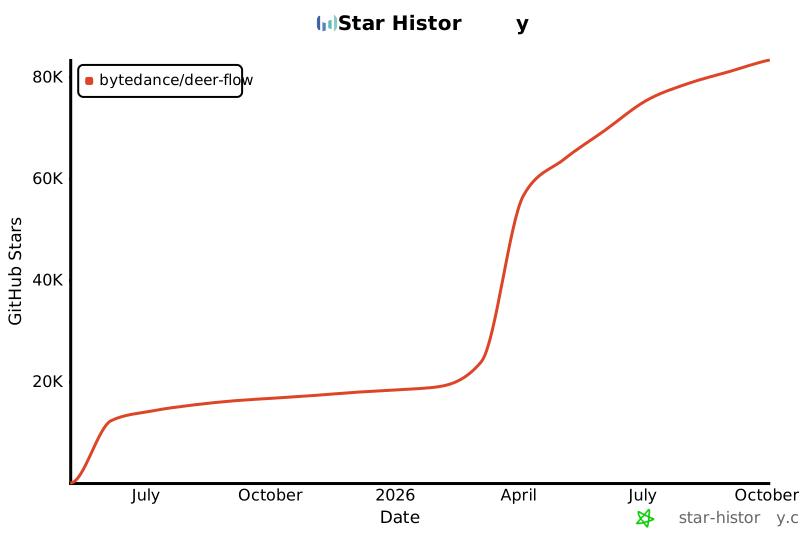](https://star-history.com/#bytedance/deer-flow&Date)
|